Why Are Guided Sciatica Pain Relief Exercises Better Than At-Home Stretching?
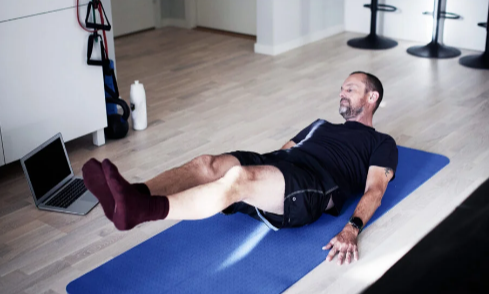
Statistics indicate that approximately 40 percent of the population will experience some form of sciatic nerve irritation during their lifetime. This shooting pain typically begins in the lower back and travels down through the leg, often causing significant disruption to daily life. Many individuals immediately turn to the internet to find sciatica pain relief exercises to perform at home. While the intention to heal is good, performing unvetted movements without a professional diagnosis can often lead to increased inflammation or further nerve damage. At Motion RX Health, we emphasize that recovery is not just about moving more, but about moving correctly through a personalized plan designed for your specific anatomy.
The primary issue with DIY stretching is the lack of a root-cause assessment. Because sciatica is a symptom of an underlying problem rather than a diagnosis itself, the same stretch that helps one person might severely injure another. For example, a stretch designed for a herniated disc may be detrimental for someone suffering from spinal stenosis. Achieving pain-free movement requires understanding why the nerve is irritated in the first place. This is where professional physical therapy for sciatica becomes an essential investment in your long-term wellness rather than a temporary fix.
Main Takeaways for Sciatica Recovery
Accurate diagnosis of the root cause is the first step toward effective treatment. General stretches can often aggravate nerve roots if performed at the wrong time or with poor form. Professional guidance ensures that you are utilizing neural gliding rather than aggressive static stretching. A personalized plan adapted to your specific pain phase leads to faster and more measurable progress. Professional intervention helps reduce fear-avoidance behavior, allowing you to return to an active lifestyle with confidence.
Complexity of the Sciatic Nerve
Sciatica represents a broad category of discomfort that involves the longest nerve in the human body. This nerve originates in the lower spine and branches out through the hips and down each leg. When people search for lower back pain relief exercises, they are often dealing with pressure on one of the five nerve roots that make up the sciatic nerve. Understanding that this is a complex neurological issue is the first step toward avoiding the pitfalls of generic stretching routines.
Several different conditions can manifest as sciatic pain. A herniated or bulging disc is a common culprit where the soft center of a spinal disc pushes through a crack in the exterior, pressing against the nerve. Conversely, lumbar spinal stenosis involves a narrowing of the spaces within your spine, which also puts pressure on the nerves. Another common issue is piriformis syndrome, where a small muscle in the buttocks tightens or spasms, compressing the nerve. Each of these conditions requires a different approach to movement. What works for a muscular issue like piriformis syndrome could potentially worsen a disc-related problem.
Why Diagnosis Precedes Exercise
Without a root-cause assessment from an expert therapist, you are essentially guessing which exercises for pinched nerve in hip will work. A professional evaluation at Motion RX Health involves specific tests to determine which movements centralize your pain. Centralization is a key indicator of recovery where the pain moves from the leg back toward the lower spine. This signal tells us that the pressure on the nerve is being relieved. DIY stretching often misses these subtle clinical signals, leading people to perform movements that actually peripheralize the pain, driving it further down the leg.
Risks of Unsupervised Home Stretching
There is a significant difference between stretching a tight muscle and treating an irritated nerve. One of the most common mistakes made during sciatica treatment at home is treating the sciatic nerve like a piece of rubber. Muscles respond well to static stretching, but nerves do not. When a nerve is inflamed, pulling on it with aggressive sciatic nerve stretches can cause a protective reaction, leading to more muscle guarding and increased sensitivity.
The nerve tension trap is a real phenomenon where patients feel like they need to stretch more because their leg feels tight. In reality, that tightness is often the body trying to protect the nerve from further damage. If you continue to pull on that nerve, you may increase the mechanical tension and chemical irritation at the nerve root. This often leads to a cycle of temporary relief followed by an intense flare-up of symptoms. Professional guidance helps you distinguish between healthy muscle tension and dangerous nerve tension.
The Danger of Poor Biomechanics
When you are in pain, your body naturally tries to compensate. You might tilt your pelvis, round your shoulders, or shift your weight to one side without even realizing it. If you perform yoga for sciatica relief without a professional watching your form, you might be reinforcing these compensatory patterns. Over time, these poor biomechanical habits can lead to secondary issues in the neck, opposite hip, or knees. An expert therapist provides real-time correction to ensure that your core is engaged and your spine is neutral, protecting you from new injuries while you heal the old ones.
Professional Benefits of Guided Exercise
Choosing professional physical therapy for sciatica provides you with a level of precision that a video tutorial cannot offer. At Motion RX Health, we focus on movement optimization. This means we look at how your entire body functions as a unit. We do not just look at the spot where it hurts; we look at the joints above and below the site of pain to ensure the whole system is supporting your recovery. This performance-driven approach ensures that once the pain is gone, it stays gone.
One of the most effective tools in a professional setting is the identification of directional preference. Clinical research shows that most sciatica patients have a specific direction of movement—either flexion or extension—that significantly reduces their symptoms. A physical therapist uses systematic testing to find this direction. Once identified, your personalized plan is built around these specific movements to promote healing. This is a level of customization that generic online programs simply cannot provide.
Nerve Flossing versus Static Stretching
In a clinical environment, we often utilize a technique called neural gliding or nerve flossing. Instead of holding a position that puts the nerve under constant tension, we guide the nerve through its natural path. This gentle movement helps to improve the blood flow to the nerve and reduce the adhesions that might be trapping it. It is a highly controlled movement that requires specific timing and coordination. Learning this technique from an expert therapist ensures you are performing it safely without over-stimulating the nervous system.
Personalization and Long Term Relief
Recovery is rarely a straight line. There are days when the pain might feel more intense due to stress, lack of sleep, or increased activity. A professional program at Motion RX Health is adaptable. We monitor your measurable progress at every session and adjust the intensity of your exercises based on how your body is responding that day. This active-lifestyle-oriented approach means we are always pushing for progress while respecting your body’s current limits.
Personalization also involves integrating your recovery into your actual life. We look at your ergonomics—how you sit at your desk, how you get out of your car, and how you lift your children. Exercises are only one part of the puzzle. If you spend eight hours a day in a position that compresses your spine, thirty minutes of stretching will not fix the problem. We provide the clarity needed to modify your daily activities so that every movement you make supports your recovery.
Cognitive Advantages of Guided Programs
Chronic pain can have a significant psychological impact. Many people develop fear-avoidance behaviors, where they stop moving altogether because they are afraid of hurting themselves further. This inactivity leads to muscle weakness and stiff joints, which ultimately makes the sciatica worse. Working one-on-one with an expert therapist helps break this cycle. By learning which movements are safe and beneficial, you regain the confidence to return to the activities you love.
Accountability also plays a huge role in recovery. It is easy to skip a home exercise session when you are feeling tired or discouraged. Having a scheduled appointment with a professional who is invested in your success provides the motivation needed to stay consistent. This consistency is what leads to measurable progress and long-term wellness. Knowing that you have an expert partner to guide you through the setbacks makes the entire process much less overwhelming.
Transitioning to Home Maintenance
There is a time and place for at-home movement. However, this should ideally happen after you have been cleared by a specialist. Once the acute pain has subsided and you have learned the correct biomechanics, a home program becomes a tool for maintenance rather than a primary treatment. We provide our patients with vetted movements that they can perform safely on their own to prevent future episodes of nerve irritation.
It is important to watch for red flags when attempting any movement on your own. If an exercise causes an increase in numbness, tingling, or weakness in the leg, you should stop immediately. These are signs that the nerve is being compressed or irritated. Similarly, if the pain moves further down toward the foot, it is a sign that the movement is not right for your specific condition. In these cases, seeking a professional consultation is the safest course of action to prevent long-term damage.
Expert Insight on Performance Science
The logic behind modern physical therapy focuses on building a resilient body. We do not just want to get you back to a baseline of zero pain; we want to make you stronger than you were before the injury. This involves strengthening the deep stabilizers of the spine and improving the mobility of the hips and thoracic spine. By optimizing how these segments work together, we reduce the workload on the lower back. This holistic view of performance and recovery is what sets professional care apart from simple symptomatic relief. We are not just treating a nerve; we are optimizing a human being for an active life.
Recap of Guided Sciatica Care
Recovering from sciatica requires a delicate balance of rest, controlled movement, and lifestyle adjustments. While the convenience of at-home stretching is tempting, it lacks the diagnostic precision and safety protocols necessary for nerve health. By choosing a guided program at Motion RX Health, you benefit from a root-cause assessment, real-time feedback, and a personalized plan that evolves with you. Investing in professional care early on ensures a faster return to pain-free movement and helps you avoid the cycle of chronic flare-ups. Prioritize your long-term mobility by choosing expert-led recovery strategies over DIY guesswork.
FAQs About sciatica pain relief exercises
Are home stretches safe for all types of sciatica?
Not necessarily. Because sciatica can be caused by different issues like herniated discs or spinal stenosis, a stretch that helps one condition might aggravate another. It is vital to have a root-cause assessment to ensure the movements you are doing are appropriate for your specific spinal health.
How long does it take to see progress with guided exercises?
Many patients feel a decrease in symptom intensity within the first few sessions as we identify their directional preference. However, significant structural healing and muscle strengthening usually take six to eight weeks of consistent, personalized care. We track measurable progress to ensure you are on the right path.
Can yoga help with my sciatic nerve pain?
Yoga can be beneficial for general mobility, but many standard yoga poses involve deep forward bending or twisting that can increase pressure on a herniated disc. If you want to use yoga for sciatica relief, it should be modified by a professional who understands your specific diagnosis to avoid further nerve irritation.
What is the difference between a muscle stretch and a nerve glide?
A muscle stretch involves holding a position to lengthen muscle fibers. A nerve glide is a repetitive, gentle movement that slides the nerve through its pathway without putting it under tension. Nerve glides are generally much safer and more effective for treating sciatica than traditional static stretching.
When should I stop doing home exercises and see a therapist?
You should seek a professional evaluation if your pain is not improving after a week, if the pain is traveling further down your leg, or if you experience any muscle weakness, numbness, or tingling. These symptoms indicate that the nerve is under significant stress and requires an expert’s intervention to prevent further injury.