How a Smart Pedestrian Crossing System Works: Sensors, Signals and Contactless Requests
Crossing a busy road relies on a simple exchange: a pedestrian asks for time to cross, and the signal gives it. A smart pedestrian crossing system makes that exchange faster, safer and accessible to everyone, replacing a plain mechanical button with contactless sensing, audible guidance and lighting that drivers can see from far away.
The idea is straightforward. Sensors detect the request, a controller works it into the signal cycle, and visual, audible and tactile outputs tell every pedestrian exactly what is happening. This article explains each part of that chain, from the sensor at the kerb to the road studs and bollards that warn approaching drivers.
Contactless Detection at the Kerb
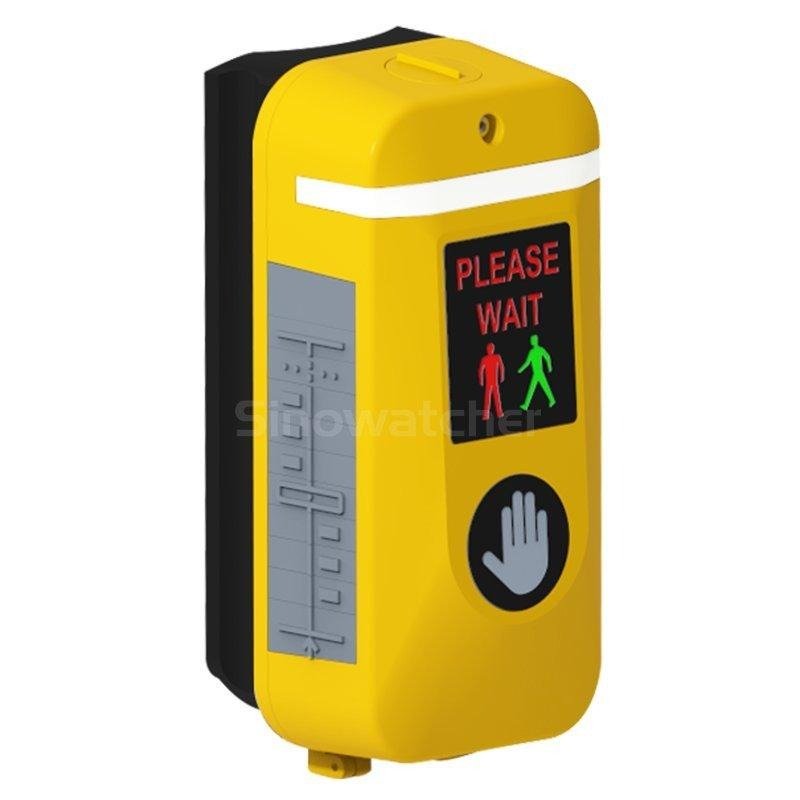
The request starts at the push-button unit, and the modern version needs no physical contact. A contactless pedestrian push button uses a sensor that detects a hand held 5-10 cm in front of it, so a simple wave registers the request. The PedSense unit from Sinowatcher works this way, with a mechanical button as a backup if the sensor is ever obstructed. The die-cast aluminium unit is rated IP55 and carries EN12368:2015 certification. The sequence is simple:
- The pedestrian holds a hand near the sensor window.
- The sensor detects the hand at 5-10 cm.
- An LED confirms the request for the controller.
- The walk signal appears, and guidance switches on.
Acoustic Guidance and Adaptive Volume
A modern audible pedestrian signal does far more than beep. An acoustic guidance unit announces when the walk signal is active, using distinct tones or spoken messages so the pedestrian knows the moment it is safe to cross. The key feature is adaptive volume: the unit measures surrounding traffic noise and adjusts its output to match, so the signal stays audible on a noisy road without becoming a nuisance on a quiet street at night. Good acoustic guidance delivers these benefits:
- A clear walk tone marking the start of the crossing phase.
- Adaptive volume that stays audible over traffic but never shouts.
- A locator tone that helps visually impaired pedestrians find the unit.
- A distinct clearance sound, so nobody starts too late.
Tactile Feedback You Can Feel
Sound alone is not enough for every pedestrian, and tactile pedestrian guidance fills the gap. A vibrating surface on the push-button unit pulses during the walk phase, giving deafblind pedestrians a physical signal they can feel. Raised markings and a tactile arrow show the direction of the crossing, while the vibration pattern changes between waiting and walking, so the difference is unmistakable.
LED Indicators and Countdown Timers
Light is the most visible part of the system. LED indicators on the request unit confirm that a crossing request has been logged, so nobody wonders whether the request went through. On the signal itself, a pedestrian countdown timer shows the seconds remaining in the walk phase, so people can judge whether they have time to finish crossing. Some systems add projection lamps that cast walk and stop symbols onto the crossing surface. The lights work together:
- An LED indicator confirming the request was registered.
- A countdown display showing the seconds left to cross.
- Bright pedestrian signal lights visible in daylight and at night.
- Projected walk and stop symbols on the crossing surface.
See also: Where Geek Culture Meets Technology and Entertainment!
Controller Integration and Signal Timing
None of these devices works alone. Every request flows into the pedestrian signal controller, which runs the junction’s signal timing and decides when the walk phase can begin safely. When a request arrives, the controller brings the traffic signals to red, then opens the walk phase for a duration set to the crossing length and the expected walking speed. This integration is what separates a smart crosswalk from a standalone beacon. Integration typically works through these steps:
- The sensor sends the request to the pedestrian signal controller.
- The controller schedules the walk phase within the signal cycle.
- Traffic signals change to red before the walk phase opens.
- The controller extends the phase if pedestrians are still crossing.
LED Road Studs and Warning Bollards
The final layer of the system faces the drivers. LED road studs set into the carriageway light up in sequence when a pedestrian is crossing. A pedestrian warning bollard stands at the kerb and flashes or sounds an audio alert while the crossing is active. Field studies of rectangular rapid flashing beacons at uncontrolled crossings report driver yield improvements of up to 80%, and in-ground lighting works the same way. These road-level warnings deliver their value in three ways:
- LED road studs that illuminate the crossing line for approaching drivers.
- Warning bollards that flash and sound an alert while the crossing is active.
- Bright, dynamic cues that hold driver attention.
Frequently Asked Questions
How close does a hand need to be to trigger a contactless pedestrian push button?
The sensor detects a hand held 5-10 cm in front of it, so a simple wave is enough. A mechanical button remains as a backup if the sensor is ever obstructed.
What is adaptive volume in an audible pedestrian signal?
The unit measures surrounding traffic noise and adjusts its output to match, staying audible on busy roads without becoming a disturbance on quiet streets at night.
Do smart pedestrian crossings help visually impaired people?
Yes. Acoustic guidance, locator tones, tactile arrows and vibrating surfaces give blind and deafblind pedestrians clear information about when it is safe to cross.
How do LED road studs improve crossing safety?
They light up along the crossing line when pedestrians are crossing, giving drivers a bright, dynamic warning at road level that is harder to miss than a static sign.
Final Thoughts
A smart pedestrian crossing system is less a single device than a coordinated chain: a contactless sensor takes the request, the controller times the walk phase, and acoustic, tactile and visual signals guide every pedestrian while road studs and bollards warn drivers. Together they make crossings faster to use, easier to understand and safer for everyone, including people who rely on sound and touch rather than sight.